Nigerian Banks Have Raised Over ₦4 Trillion Ahead of Recapitalization Deadline
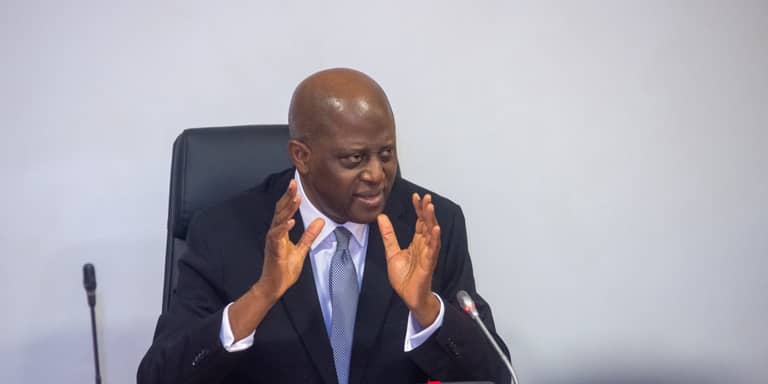
History was made in the Nigerian banking sector as it raised more than ₦4.05 trillion in fresh capital ahead of the March 31, 2026, recapitalisation deadline set by the Central Bank of Nigeria (CBN), marking one of the largest coordinated capital mobilisation efforts ever known in the industry. This information was disclosed by the governor of the apex bank, Olayemi Cardoso, during the Monetary Policy Committee (MPC) briefing held two weeks ago in Abuja.
The capital raised resulted from the CBN's revised recapitalization policy introduced in March 2024, which altered the minimum capital requirements for commercial, merchant, and non-interest banks. The new framework mandated international commercial banks to maintain a minimum capital base of ₦500 billion, national banks ₦200 billion, and regional banks ₦50 billion. All banks were given 24 months to raise the capital, with the compliance period running from 1st April 2024 to 31st March 2026, giving lenders a two-year window to shore up their balance sheets.
After the recapitalization announcement in 2024, it appeared almost impossible to raise this minimum capital, but somehow 20 banks smashed the threshold within a month of the deadline. Here’s what they did: banks decided to deploy strategies like equity offers, rights issues, private placements, and public offerings, while although some opted for other valuable investor partnerships.
Tier-one lenders, banks like Zenith, UBA, First Bank, Access bank and GT Bank led the charge. They started by launching several large-scale rights issues, which allowed existing shareholders to purchase additional shares at discounted prices to boost paid-up capital. Alongside other banks, they also opened public offers of their shares to attract new retail and institutional investors, which was the reason why most Nigerian banks sold their shares publicly in 2025.
Some investment analysts, like Peter Uche, who spoke with the Independent Newspaper, believed that strong investor appetite helps the banks raise capital. They think the recapitalisation exercise coincided with improved profitability across the sector, making the equity story these banks were selling attractive. According to Mr. Uche, higher interest margins, foreign exchange revaluation gains, and digital banking expansion have so far strengthened their balance sheets, which made capital raising more feasible.
As announced by Olayemi during the CBN Monetary Policy Committee briefing, a significant portion of the ₦4.05 trillion was raised through rights issues completed between the second half of 2025 and early 2026. Although he pointed out that while 13 banks are yet to meet the new minimum requirement, it is impressive that they are already at an advanced stage of their capital-raising process.
He also stated that of the ₦4.05 trillion capital raised and verified, ₦2.90 trillion, accounting for 71.6% of the total, has been mobilized domestically, while 28.33%, or ₦1.15 trillion, represents foreign participation. To him, the mix of domestic and foreign investments signals a broad investor engagement and confidence in the Nigerian banking sector.
It’s few weeks away from the regulatory deadline, and with the CBN governor's report, most major banks seem to be on track, meeting or exceeding the new threshold. It is less likely that a merger will occur, unlike in the 2004-2005 recapitalization. We will all wait to see the final compliance update from the CBN after 31st March, 2026, to find out which banks made it through another recapitalization season.
Disclaimer: The content above is an independent analysis for informational purposes only, and the data cited were drawn from public sources where market trends and insights were made available.
Comments (0)